


Automotive powertrains operate under constant pressure. Every component from the transmission and differential to the transfer case in 4WD systems depends on great lubrication to operate smoothly. Choosing the best gear oil for a vehicle application is far more than just picking a brand; it entails knowing gear oil grades, viscosity ratings, and performance standards that would accurately match the driving conditions.
At Tata Motors’ Automotive Fluids, we often see that vehicle owners and fleet managers focus on engine oil but overlook gear oil. However, gear systems are exposed to extreme pressure, very high torque loads, and the rubbing of metal parts against each other. Thus usage of the proper gear oil grade has a direct impact on a vehicle’s life, smooth gear changes, fuel economy, and overall vehicle reliability.
Why Gear Oil Matters in Automotive Powertrains
Gear oil is formulated to withstand high pressure between the teeth of gears. This is because the gear teeth undergo sliding and rolling action under heavy pressure, especially in manual transmissions and differentials. Engine oil is not formulated to withstand such high pressure.
Such an automotive gear oil:
- Reduce friction and wear
- Prevent metal-to-metal contact
- Resist thermal breakdown
- Protect against corrosion and oxidation
- Maintain viscosity under load
Fleets of commercial vehicles, along with passenger vehicles, today require such lubricants that can effectively work in city traffic as well as on highways. This is where understanding oil grades becomes critical.
Understanding Gear Oil Viscosity Grades
Typically, the SAE (Society of Automotive Engineers) viscosity grading system is what classifies gear oil grades. By chance, you might have also come across a grade or two such as SAE 75W-90 or 80W-140. Basically, these numbers are the temperature-dependent performance characteristics of the oil.
Single-Grade vs. Multi-Grade Oils
Single-grade oils (e.g., SAE 90)
- Suitable for consistent climates
- Limited temperature flexibility
Multi-grade oils (e.g., 75W-90)
- Flow easily in cold conditions (W = Winter)
- Maintain thickness at high temperatures
- Ideal for varying weather and driving conditions
With the tropical climate of Singapore and other Southeast Asian countries, it is very important to pick the right viscosity so that the gears are perfectly protected even at high ambient temperatures.
API Classification: GL Ratings Explained
Besides viscosity, gear oils are rated by API GL levels (Gear Lubricant categories). These ratings reveal the oil’s performance under load.
Common GL Categories
- API GL-4
Suitable for vehicle transmissions and moderate load conditions. It offers sufficient protection but is still compatible with the synchronizers.
- API GL-5
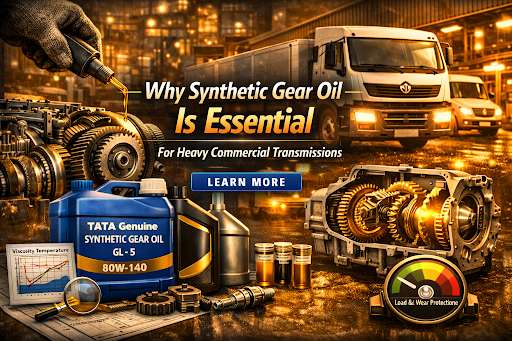
Made for heavy-duty applications such as differentials and hypoid gears. Packed with extreme pressure (EP) additives to provide better protection.
If you use a GL rating oil that is improper, it may cause the vehicle parts to wear out very fast or lead to poor transmission performance. For this reason, it is important to follow the manufacturer’s recommendations when picking the best gear oil for vehicle applications.
Key Additives in Modern Gear Oils
Gear oils are not just base oils. New additive technology is one of the main reasons why oil is able to both last longer and perform better.
Important Additives Include:
- Extreme Pressure (EP) additives: Can exert pressure even under heavy loads
- Anti-wear agents: Help in lessening the damage to the surface
- Oxidation inhibitors: They help the oil last longer
- Anti-foam agents: They ensure that the lubrication is consistent
- Rust and corrosion inhibitors: They stop the internal parts from rusting
For commercial vehicles and heavy-duty trucks, these additives really mean a lot in terms of extending the intervals between services and lowering the overall running costs.
Gear Oil for Manual Transmissions vs. Differentials
Not all gear systems are the same. A lubricant for a manual transmission differs from the one used for a differential.
Manual Transmission Fluid
- Needs to smoothly work with synchronizers
- Generally uses the GL-4 standard
- Designed for the best shifting performance
Differential Oil
- Can take high torque and impact load
- Usually needs the GL-5 standard
- Could have limited-slip additives
Using the correct oil will help the gears mesh better, make less noise, and be more reliable over time.
Synthetic vs. Mineral Gear Oil
Due to the development of new lubricants, an increasing number of vehicle operators are opting for synthetic gear oil.
Mineral Gear Oil
- Cost-effective
- Suitable for standard operating conditions
- Requires more frequent changes
Synthetic Gear Oil
- Superior thermal stability
- Better cold flow performance
- Longer service intervals
- Enhanced protection under extreme load
Synthetic lubricants are usually recommended for fleet operators and high-performance vehicles, as they can help save fuel and lower wear.
Factors to Consider When Selecting Gear Oil
Before choosing a gear oil grade, consider the following:
- Vehicle manufacturer’s recommendation
- Driving conditions (city, highway, off-road)
- Load capacity
- Climate and temperature range
- Service interval requirements
If a wrong grade is selected, it can cause whining in the gears and the problem of overheating or even premature transmission failure. That is why comprehension of the specifications is mandatory while looking for the best gear oil for vehicle systems.
Maintenance Tips for Longer Gear Life
Maintenance is important, and it doesn’t end just by choosing the right oil. The following are some practical tips to share:
- Follow recommended drain intervals
- Inspect for leaks regularly
- Monitor unusual transmission noise
- Replace oil seals when needed
- Use approved lubricants only
Proper servicing at regular intervals ensures that gear oil remains capable of protecting the gear throughout the duration of its use.
Supporting Performance Across Passenger and Commercial Vehicles
At Tata Motors Automotive Fluids, we create lubricants that support a diverse spectrum of needs, from passenger vehicles to heavy-duty commercial fleets. Our products are made to comply with the highest performance standards and operating demands.
We understand that consistent lubrication is an essential factor for the uptime in logistics and transport, and we ensure that our high-performance gear oils are the right choice for these industries. Our high-performance gear oils not only provide smoother gear engagement but also decrease friction losses and extend the lifespan of the components.
Automotive technology advances by the minute, and the equipment parts become more precise and the transmissions more advanced. With powertrains becoming more efficient and compact, the need for precision in a lubricant also increases.
Advancing Protection Through the Right Lubrication Strategy
Choosing the right gear oil grade is a decision that will pay off in the long run. When drivers and fleet managers pick the best gear oil for vehicle application, they are essentially buying more than just gears; they are also investing in efficiency, durability, and operational reliability.
People looking for information on gear oil viscosity grades, API GL-4 vs GL-5, synthetic gear oil for manual transmission, or automotive lubricants for commercial vehicles will find it very helpful to understand this classification. Selecting a lubricant that perfectly matches the vehicle manufacturer’s requirements and the working conditions will enable the vehicle to produce its maximum power and have an extended service interval.
We at Tata Motors Automotive Fluids are always ready to deliver high-quality products that are specifically designed to support the needs of the modern automobile and enable every gear shift and torque transfer to be made with the greatest certainty and accuracy.